
Product category
Temperature
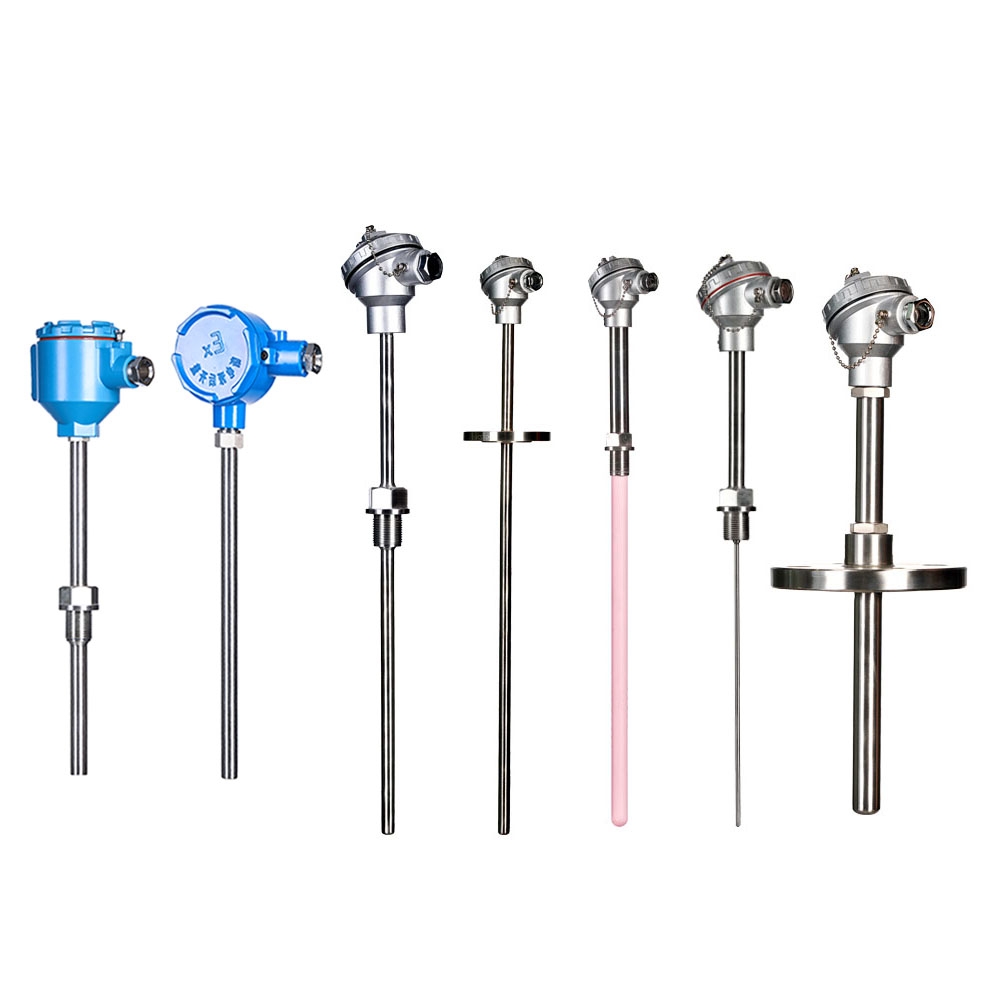
Thermocouples and resistance thermometers for process temperature measurement.
4 products
Instrumentation / Temperature
Thermocouple
Two conductors of different composition (called thermocouple wires or thermoelectrodes) are joined at both ends to form a circuit. When the temperatures of the two junctions differ, an electromotive force is generated in the circuit; this phenomenon is called the thermoelectric effect, and this electromotive force is called thermoelectric potential. Thermocouples use this principle for temperature measurement, where the end directly used to measure the medium temperature is called the working end (also called the measuring end), and the other end is called the cold end (also called the compensating end); the cold end is connected to a display instrument or matching instrument, and the display instrument indicates the thermoelectric potential generated by the thermocouple. Common thermocouples can be divided into two major categories: standard thermocouples and non-standard thermocouples. Standard thermocouples are those for which the national standard specifies the relationship between thermoelectric potential and temperature, permissible error, and a unified standard graduation table, and matching display instruments are available for selection. Non-standard thermocouples are inferior to standard thermocouples in scope of use or order of magnitude, generally have no unified graduation table, and are mainly used for measurement in certain special occasions. Our company's thermocouples and thermal resistors are all produced according to IEC international standards, and the seven standard thermocouples/resistances S, B, E, K, R, J, and T can be specified for customization.
View specifications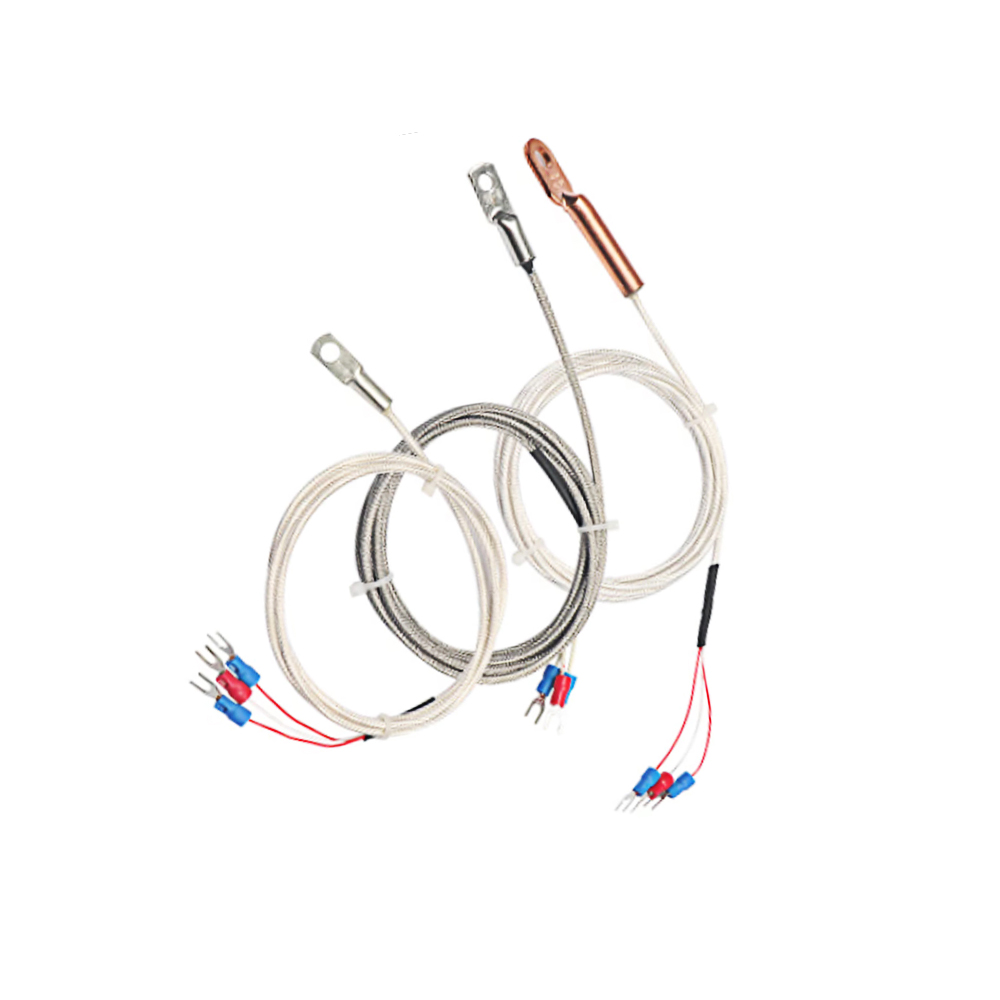
Instrumentation / Temperature
Resistance Temperature Detector
This Pt100 platinum resistance temperature detector uses a high-purity platinum wire as the temperature-sensing element, conforms to IEC60751, has a nominal resistance of 100Ω at 0°C, and a temperature measurement range of -200~500°C. Class A and Class B accuracy are available. It is equipped with a 304 stainless steel protective sleeve, resistant to corrosion and robust in structure. It collects temperature using the characteristic of platinum resistance changing with temperature, with high measurement accuracy, good repeatability and strong stability. It supports two-wire/three-wire/four-wire connection and is compatible with various temperature control instruments. It is widely used for low- and medium-temperature precision temperature measurement in food, pharmaceutical, HVAC and chemical equipment. Protective tube length, threads and flange specifications can be customized. Customization is supported, and supply is stable.
View specifications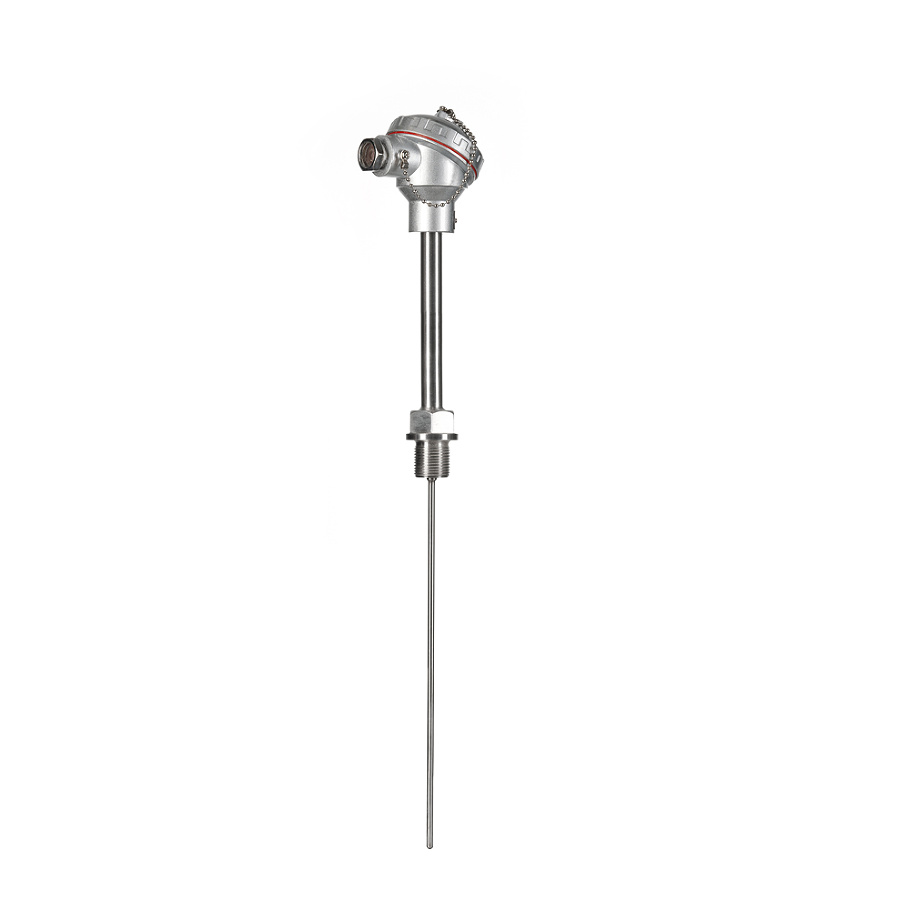
Instrumentation / Temperature
Type K Thermocouple
The thermocouple is a temperature sensing element, using nickel-chromium/nickel-silicon (Type K), conforming to IEC60584, with a temperature range of 0 to 1300°C, accuracy class II, stainless steel protection tube, capable of outputting a thermoelectric potential signal, used for medium temperature acquisition, and paired with temperature control devices for temperature monitoring and control
View specifications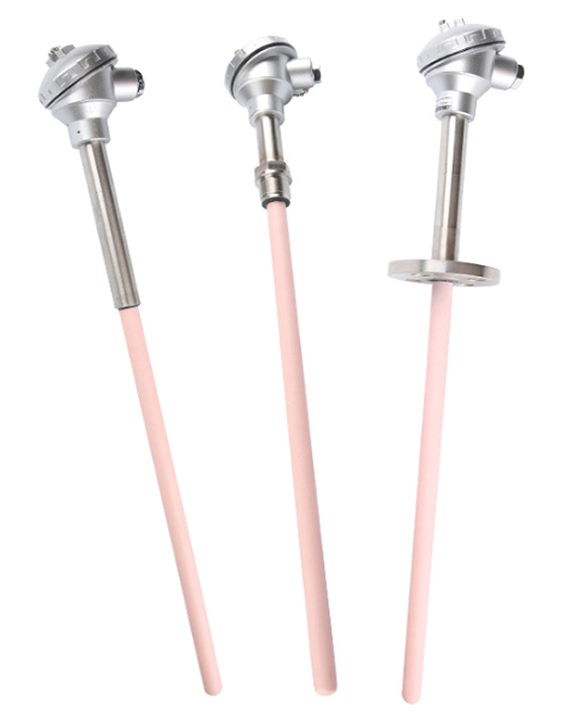
Instrumentation / Temperature
Platinum-Rhodium Thermocouple
This S-type platinum-rhodium thermocouple is a platinum-rhodium 10 - platinum noble metal temperature sensing element, compliant with IEC60584. Long-term temperature measurement range 0–1300°C, short-term maximum up to 1600°C. Accuracy class I/II selectable. Equipped with a corundum protective tube, resistant to high temperature and oxidation, suitable for oxidizing and inert atmospheres. The product offers stable thermoelectric potential and high measurement accuracy; paired with high-temperature instruments for signal acquisition, it is widely used in ceramic kilns, glass furnaces, heat treatment furnaces, and metallurgical high-temperature measurement scenarios. Customizable protective tube length, threads, and flange structures; customizable, stable supply.
View specifications